Craft, Plentitude, and Negation: Delivery in Post-Consumer
Rhetorics
---
In an article about the writing of
William S. Burroughs, Marshall McLuhan describes how “men’s nerves surround us;
they have gone outside as electrical environment” (in Skerl and Lydenberg, p.
69). Further, McLuhan describes Burroughs’ books, Naked Lunch and Nova Express,
as “a kind of engineer’s report of the terrain hazards and mandatory processes,
which exist in the new electronic environment” (ibid.), a characterization
Burroughs himself makes (Naked Lunch,
p. 224). This bit of literary criticism by McLuhan points not only to the
production and reception of messages, but to the production and reception of environment as well. Having turned our
insides out, we are confronted with a new awareness of our nervous system, its
processes, circulations, effects, stimulations, affective registers, and speed.

Yet media theories often stop short
of the point. McLuhan’s student, Neil Postman, defined the phrase “media
ecology” as “the study of transactions among people, their messages, and their
message systems” (1970, p. 139). The phrase “media ecology” is often bandied
about by consultants, theorists, professionals, and even professors who take
the “ecology” portion of the phrase to mean the sum total of media outlets:
social, print, and broadcast. In this sense, the word “systems” is used in a
restricted sense to denote mainly the outlets rather than the technical
hardware which makes those outlets possible. Take, for example, James Porter’s
(2009) excellent call to “resuscitate and remediate” delivery for the digital
age. Important as Porter’s reworking is, nowhere does he attend to the
material. As part of his proposed theoretical framework, he lists a dimension
of “distribution/ circulation,” which he defines as “concerning the
technological publishing options for reproducing, distributing and circulating
information” (p. 208). He is correct in pointing to the array of “modes” we now
have our disposal; our attunement to those modes in terms of timeliness,
content, emotion, and ethos; and that there is a difference between delivery
and distribution (p. 214). And yet the “technical knowledge” associated with
this dimension pertains to “how audiences are likely to access, engage, and
interact with information” so that rhetors can make critical decisions “about
informational content, design, style, etc.” (p. 208). This is more dramatic in
his dimension on “Body/ Identity” where the bodies he talks about are
constructed only through representations and even where he admits that the
machines “we use to write and speak are closely merged with our flesh-and-blood
bodies,” his posthumanism goes little beyond that we are able to attach our phone/computer
to our ears.

So, while Porter is absolutely
right, there are dimensions left out of his treatment of digital delivery. My
only critique here is that the ideas haven’t been pushed far enough. With
posthuman, post-consumer, electronic, environmental thinking we can neither so
easily separate representations from being nor compartmentalize the rhetorical
canons themselves. Rather, there are continual crossings of channels, modes,
and heuristic categories. I want to call attention to a few ways these
categories are crossed and repartitioned in new ways, not just severed and
fragmented. Indeed, the repartitioning and reworking of what were once separate
domains is precisely how I want to look at the notion of “craft” in an
expanded, almost Burroughsian sense.
Hardware constitutes something of
the cellular level of our own nerves surrounding us. Publishing outlets, the
distribution of a message apart from its media, and the technical knowledge
associated with these are organic processes and should not be confused with the
externalized cellular processes themselves. When looking at systems of
delivery, then, externalizing our nerves puts on display more of the corporate
bodily processes – the processes of eating, digesting, and fucking – the organs
of vein, nostril, and anus – points and processes where technology meets
environment. Like the good junkies we are, always looking for the next
electronic fix, to turn a blind eye to this risks becoming the “grey,
junk-bound ghost” of William Lee, “
El Hombre Invisible” (Burroughs, p. 61),
inhabiting this earthly plane more as spirit than as body.
 Like real bodies, corporate bodies
must ingest raw material and process them into useful enzymes, proteins,
aminos, peptides, or vitamins. All these organs are already on display with the
mosquito mouth of every oil rig, Molycorp’s great baleen mouths sifting for
neodymium and scandium at the Mountain Pass mine in California, the GIS-perfect
rows of corn that hashtag the Iowa landscape, and the twirling windmill lungs helping
to oxygenate the electrical blood that feeds the whole shebang. Let’s not also
forget, as Shawn and Kristi Apostel (2009) have argued, these bodies shit, too.
In China, Ghana, and other developing countries, residents are appropriated
like intestinal bacteria to smelt out the lead and gold from refuse heaps of
sloughed off e-waste. These are all part of the delivery systems we use and
which Burroughs points us to. But they are the part of the delivery system we
do not like to focus upon. It is understandable the ease with which we – and
the corporate bodies with which we are entangled – might want to become
ghostly.
Like real bodies, corporate bodies
must ingest raw material and process them into useful enzymes, proteins,
aminos, peptides, or vitamins. All these organs are already on display with the
mosquito mouth of every oil rig, Molycorp’s great baleen mouths sifting for
neodymium and scandium at the Mountain Pass mine in California, the GIS-perfect
rows of corn that hashtag the Iowa landscape, and the twirling windmill lungs helping
to oxygenate the electrical blood that feeds the whole shebang. Let’s not also
forget, as Shawn and Kristi Apostel (2009) have argued, these bodies shit, too.
In China, Ghana, and other developing countries, residents are appropriated
like intestinal bacteria to smelt out the lead and gold from refuse heaps of
sloughed off e-waste. These are all part of the delivery systems we use and
which Burroughs points us to. But they are the part of the delivery system we
do not like to focus upon. It is understandable the ease with which we – and
the corporate bodies with which we are entangled – might want to become
ghostly.

Now, it would be easy to launch at
this point into the tired, dystopian environmental scenarios that mutate from
the DNA of Frankenstein and Blade Runner. I do think there are dire
consequences for not paying attention and for slowing turning into ghosts of a
ruined world. However, I do not mean to launch a regressive environmental
screed against industrialization and technology. It is not a question of a
binary between one or the other. Our ecology has already become technology, or
more accurately, our environment is continually becoming ourselves – both in
the literal sense, as well as in the form of our externalized organs. To argue
against technology is to argue against who we have become.
While it is legitimate, perhaps
necessary, to question who we have become, we must also accept who we are. I am
neither entirely critical of nor entirely sanguine of that. As Colin Beavan
writes in his book,
No Impact Man,
environmentalists of recent years have done much to pivot away from the
austerity-minded, smaller versus bigger, back-to-the-land thinking of “the old
environmentalism of the 1970s” (p. 216). Contemporary environmental activists
like Wes Jackson’s
The Land Institute are developing technology in ways
that impact the environment differently with the understanding that existence
itself implies impact. And, of course, there is the kind of thinking about
environment and environmentalism exemplified by scholars like Timothy Morton
who said that ecological thought is “a matter of
how you think. Once you start to think ecological thought, you
can’t unthink it: it’s a sphincter – once it’s open there’s no closing” (p. 4).
This strain of environmental
thinking acknowledges and attempts to deal with “the negative” in much the same
way John Muckelbauer (2008) attempts to deal with the negative in regards to
invention and change. And Muckelbauer calls invention into question in ways I
contend environmentalism and environmental rhetorics should with respect to
delivery. He writes, “What is at issue in binary oppositions is not the
abstract existence of opposite terms, but the pragmatic movement of negation
through which such oppositions are generated and maintained” (p. 5). Following
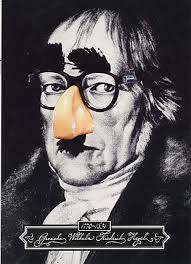
Deleuze’s critique of Hegel, Muckelbauer explains how advocacy of a concept,
critique of the concept, and synthesis between the two are styles of engagement
ineffectual at producing real change. Each “repeats the structure of negation
and reproduces the ethical and political dangers that accompany such movement”
(p. 9). For invention, then, Muckelbauer’s project attempts to “move beyond”
Hegelian dialectic and I think such inventions would be good for delivery as
well.
So, it is not a question of
switching to “green” technology or retrofitting current systems to work in ways
that pollute less, recycling, or eschewing electronic hardware altogether. To
get at real change, we need to move beyond solutions structured by binaries.

Indeed, there are rumblings that
this project is already be underway. However, because the thinking about this
is not dialectical, the style of engagement allows for an understanding of how
the more traditional concerns of Porter or the Apostels are linked with
readings of Burroughs’ manual for an electronic age. Put more simply, I argue
that we can better follow the swirl of what Felix Guattari called the three
ecologies: the natural, social, and mental. Technology spans all three,
touching and affecting each in different ways. Jane Bennett’s
Vibrant Matter (2010) outlines the
political ecology that might inform a more robust digital delivery. Reading
John Dewey and Jacques Ranciére through a Latourian lens, Bennett outlines a
potential alternative to our current political ecology as well as extending
Latour’s call for a reassembling of the social. She writes
Theories of
democracy that assume a world of active subjects and passive objects begin to
appear as thin descriptions at a time when the interactions between human,
viral, animal, and technological bodies are becoming more and more intense. If
human culture is inextricably enmeshed with vibrant, nonhuman agencies, and if
human intentionality can be agentic only if accompanied by a vast entourage of
nonhumans, then it seems that the appropriate unit of analysis for democratic
theory is neither the individual human nor an exclusively human collective, but
the (ontologically heterogeneous) “public” coalescing around a problem” (108).

Transposing this to rhetorical
delivery, we might then ask who are the “publics” coalescing around the problem
of getting a message out, circulating it, and even transmuting it across media
platforms. We may also ask who the nonhuman subjects are – as Porter does to a
limited extent – but take it further: who else is linked to those nonhuman
subjects in roles of maintenance, supply, or servitude whether willing or
coerced? What do these publics do? Where do they get their fix? How do they
shit and who is their shit good for? Such questions may not only broaden who we
consider when delivering messages and ideas, but refigure the idea of delivery
itself.
Bennett argues further that
achieving this will likely require a changing of perspectives via transgressive
assemblages, much like the example she cites from Ranciére about the plebians
interruption of the Roman Republic. In that example, there is an assemblage
that is not so much oppositional “in the manner of the Scythian slaves” (p.
105) as parallel with their own speeches, imprecations, consulting of oracles,
and representatives. In this way, “the plebs managed to repartition the regime
of the sensible” (p. 106). Such a repartitioning is necessary for us as a
public to see the alien mugwumps and alien objects who carry our messages and
how delivery is distributed and open up space for a re-identification of alien
allies. Burroughs may not be the most rhetorically or pedagogically effective
manual to use at this point. But he has pointed the way.
Economist Juliet Schor (2010) has
similarly argued for the establishment of a more decentered, autonomous, yet
parallel set of economic markets that are now possible through social media
sites like Ebay, Etsy, and Dawanda as well as through community links to
farmers markets, craft goods, and local products. By switching, as much as
possible, to local and craft markets linked electronically, she argues that we
may reap a host of benefits in the form of
downshifting, alternative transportation, and community
involvement, all part of what she calls “the new plentitude.” Underneath the
surface of her data, I think there are signs of rhetorical delivery in the
materialist way I have suggested here. According to the American Craft Council
in Minneapolis, whom I would like to thank for their generous research
assistance, sites like Etsy have grown from $181 million in sales in 2009 to
$314 million in 2010, has about 14 million members, and serves about 2.2
million U.S. citizens per month. But the materials sought out and used by
individual craftspeople, from specialty hops and grains to wools and dyes,
pigments, and heirloom seeds are the material. No longer aiming for a catchall
variety of seed like Yellow Dent #5 corn, we now also aim for Black Aztec,
Mandan Bride, and Country Gentleman varieties. It is not a rejection of
capital, but a shift in the space of commodification. It is a material
diversity which has an impact and yet avoids the paradox because its impact is
different. These are repartitioned regimes of the sensible, telling new tales
and offering new lessons.
From this vantage point, crafts become more than simply
objects, processes, heuristics, or knowledge. Craft becomes spatialized with
the potential to rework our material networks. Such action cannot come by
negating the status quo, but must build upon it, non-dialectically. As Schor
argues, true wealth is found in lots of time at parks, public gatherings, in
working around 21 hours per week, and perhaps even taking in a pint at the
local watering hole and reviewing it online later that day. So, we must accept
how things are even as we admit faults beyond any individual. Craft, then, is
not only an aesthetic object, form, or activity, but a political and social
actant. It doesn’t replace art or posit heuristics, but is a dynamic and fluid
category enmeshed with our material lives. As theorist, Peter Dormer, calls it,
craft is “the workmanship of risk” (p. 150).
With contemporary rhetorical
delivery, we need to confront our expanded means on 1) visual display, 2)
embedded coding, and 3) material support of circulation, but we also need to
remain open to happenstance. How might each of these engage risk in productive,
perhaps even transgressive, ways? By looking at the material support of
delivery and circulation, what kinds of risks, transgressive or not, are we
willing to take? Who and what do we identify or want to identify as engaged in
each of these? Who gets left out?
Both the workmanship of risk and
attention to who is enmeshed in one’s delivery are increasingly important
considerations as we think about and teach rhetoric. But, finally, any
consideration of one canon from my perspective can’t be channeled solely to a
single one. As we think about and teach delivery in new ways, we need to also cross
our wires, so to speak, and admit that rhetoric as a whole is changing as both
exigency and response.
Changes in how we approach delivery
will affect how we approach style and arrangement. Ben McCorkle (2012) points
out in Rhetorical Delivery as Technological
Discourse how paragraphs spatialize the printed page but are grounded in
earlier, oratorical markings of texts (pp. 115-16). Like Porter, he traces this
into contemporary rhetoric with attention to design and the more visual
features of print. But he also traces how delivery has crawled out quite a bit
from its subordination in the belletristic tradition. McCorkle notes how Hugh
Blair theorized the text as primary to the speech. As a result,
with so much
attention placed upon how the stylistic effects played in the minds of the
audience, the notion that handwritten texts imitated printed ones on a material
level – what we might call a nascent or invisible form of delivery – was not
given overt treatment. Rather, these rules got hidden, conflated with
principles of style and arrangement, and were theorized as “natural” forms of
persuasive writing (112).
So, we are caught in a swirl of
objects, aliens, nightmarish creatures, and ghosts. Once ascribed to our inner
workings and psyche, this menagerie is more and more externalized in very real
and material ways, across distributed networked systems. But we might take some
comfort in that if we can see with different eyes or read a different set of
manuals on them. Rather than modernist eyes who see only orcs and ringwraiths
and who long for the comforts of a quiet home, rather than the corporate/
Hollywood eyes of Monsters, Inc. who make a world of monsters that are just
like people, we might look out with more child-like eyes and see Wild Things on
a distant shore, knowing we can dance with them, be hailed by them as their
king, but still return to find our dinner waiting.
Works
Cited
AmericanCraft Council. The Craft Organization
Development Association Review (2011): Craft Artists, Income and the U.S.
Economy. American Craft Council: Minneapolis, MN. Print.
Beavan, Colin.
NoImpact Man: The Adventures of a Guilty Liberal Who Attempts to Save the Planet,
and the Discoveries He Makes About Himself and Our Way of Life in the Process.
Boston: Farrar, Straus, and Giroux, 2009. Print.
Bennett, Jane.
VibrantMatter: A Political Ecology of Things. Durham, NC: Duke UP, 2010. Print.
Dormer,
Peter. “Craft and the Turing Test for Practical Thinking.” In The Culture of Craft, Ed. Peter Dormer.
Manchester, UK: Manchester UP, 1997. 137-157. Print.
Guattari, Felix.
TheThree Ecologies. Trans. Ian Pindar and Paul Sutton. London: Continuum, 2000.
Print.
Morton, Timothy.
EcologyWithout Nature: Rethinking Environmental Aesthetics. Harvard; Harvard UP,
2007. Print.
Muckelbauer, John.
TheFuture of Invention: Rhetoric, Postmodernism, and the Problem of Change.
Albany, NY: SUNY Press, 2008. Print.
Postman, Neil. “The Reformed English Curriculum.” In High
School 1980: The Shape of the Future in American Secondary Education, Ed. A.C. Eurich. New York:
Pittman, 1970. 160-168. Print.
Willett, John. “UGH…” In William
S. Burroughs At the Front: Critical Reception, 1959-1989, Jennie Skerl and
Robin Lydenberg, Eds. Carbondale, IL: SIUP, 1991. 41-44. Print.

 This makes the persona of Eugene Goostman all the more
interesting. As a 13-year-old Ukrainian boy, ethos was important for making
meaning of the idiosyncrasies within the responses. However, Turing’s test
assumed a “generic” human. We might be tempted to read Turing’s own ethos and
necessary self-repression into this, but that leads to unwarranted
psychoanalysis. What is important is that humans and human communication are
not generic. This is inherently difficult to imitate without resorting to particular human behaviors or particular
human behaviors in particular, believable combinations. Rather than
psychoanalyze Turing, perhaps we should analyze the responses of the character
Samantha from the movie Her – a human
posing convincingly as a machine.
This makes the persona of Eugene Goostman all the more
interesting. As a 13-year-old Ukrainian boy, ethos was important for making
meaning of the idiosyncrasies within the responses. However, Turing’s test
assumed a “generic” human. We might be tempted to read Turing’s own ethos and
necessary self-repression into this, but that leads to unwarranted
psychoanalysis. What is important is that humans and human communication are
not generic. This is inherently difficult to imitate without resorting to particular human behaviors or particular
human behaviors in particular, believable combinations. Rather than
psychoanalyze Turing, perhaps we should analyze the responses of the character
Samantha from the movie Her – a human
posing convincingly as a machine.


