
11.13.2008
Graduate Texts
Here's what I'm thinking of teaching for my first graduate seminar, "Rhetoric, Writing, & Teaching." It is designed for newbies to rhetoric, especially teachers who need continuing education credits or who are in our Teaching Secondary English master's program. However, TAs, creative writers, and literary students will no doubt also find something of interest.


11.05.2008
Go, Gopher State!
I love Minnesota politics. And not just because my grandpa was part of it, but b/c of its contributions on the national stage, too. Gene McCarthy's anti-war stance (and Humphrey's tepidness on that very issue as Johnson's VP), Mondale choosing Ferraro, Governor Ventura... and this: It'll be days before we know the end result, but Franken has done an amazing job and this is testament to the ways in which, as a population, Minnesota is open to some creativity.
 It'll be days before we know the end result, but Franken has done an amazing job and this is testament to the ways in which, as a population, Minnesota is open to some creativity.
10.27.2008
What About the NEXT Election?
Normally, I don't like to dabble in fear. But there is a nasty underbelly to American society that I think we're being a bit Pollyanna-ish about. It's called the Christian Right. Now, I don't mean the decent church-going folks who spend hours of their week organizing or participating in church activities, nor folks who pass along literature such as Gideon's Bibles to college students, nor even the ideal-minded voter who uses abortion as a litmus test for choosing a candidate. By "Christian Right" I mean the organized and fairly well structured affiliation of groups, causes, and leaders who misconstrue the U.S. Constitution as a religious document, who see the world only from their Christian ideology, who don't separate Christian doctrine from American and Western social norms, and who are currently using irresponsible scenarios to fan the flames of hatred and intolerance. See these two links in particular.
While it seems that this presidential election is offering many of the changes it promised (on both sides), what I fear is what happens in four or eight more years. I admit it seems unlikely that in 2012 or even in 2016 that we will be faced with President Palin, I admit that these years are frought with uncertainty. Hard times call for desperate measures, as the saying goes and the base supporting Palin will likely take this to heart as Paosner's article notes. This base feels that they -- and only they -- are the "real America" in Palin's own words. They are the base from which home-grown terrorists are likely to come in the guise of defending that real America.
Janet Folger, for example, has argued that her opponents are "not advocating tolerance. If that were the case, they'd live and let live. Instead, they do things like demand that the Boy Scouts change their position by accepting homosexuality. And they will sue anyone who doesn't agree with them. It's basically forcing people to embrace their behavior" (source). She conflates "tolerance" with maintaining an intolerant status quo, something which lost in the Boy Scout case anyway. But Folger was funded by Rev. James Kennedy and there are more like him -- from Pat Robertson to Rod Parsley, to James Dobson. These are the names of the Christian Right who have their own funding, their own access to power, and their own versions of what the political fringe understands as madrasahs -- radical schools of fundamentalism -- in order to inculcate their inflexible ideology.
On its own, I'd imagine this ideology might wither and die. I certainly don't think it is popular when exposed for what it is. However, the issues it raises resonate with a lot of voters -- even folks who are now going for Obama. Note how even the good Senator from Illinois has bluntly stated that marriage is between one man and one woman; anything else is just too secular for much of America, despite the fact that sanctioning committed relationships between people is the government's job. A marriage license is, after all, a legal document. Tolerance would be accepting ALL forms and religious sanctioning of the practice, regardless of gender and if you don;t want homosexuals to marry, then don't marry them! Furthermore, the McCain campaign has been warning its base about total democratic control of "all branches of government.. no checks and balances." This is malarkey of the first-order as the Court is still famously balanced, if tilting right for now and even in that center-right tilt, it often rules against the Bush administration. Further, there will still be a minority power in Congress and so the deals will not be signed, sealed, and delivered with no input from the Republicans.
Again, though, the point is how this will all unfold itself in the social fabric. Will a coalition of intolerance form under the guise of "real America" and a "real alternative" sort of like a perversion of the Green Party in 2000? Will home-grown terrorism shift the "War on Terror," apparently further legitimating the charges of government persecution? Or, will economic difficulties once again stir age-old racial tensions and divisions, thus muting the progress we have seen under an Obama candidacy? I think the answer remains murky at best, but I have hope that Obama is smart enough to already see this coming. However, there is a lot not within his control: the economy, the massive shift he proposes to a more eco-friendly manufacturing base, the confluence of intolerant ideologies and ideologues, and public perception of how we collectively handle these and other challenges.
10.06.2008
Two-Minute Love Songs
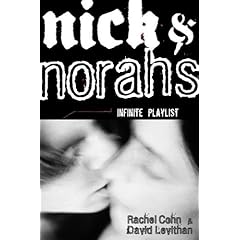 Going into it, I thought Michael Cera is getting typecast, Mark Mothersbaugh soundtracks have run their course, and I questioned what could come of the oft-used plot where uber-hip youths embark on a journey throughout NYC while set to glamorous music and shots of cultural landmarks. Happily, and while these things might indeed be true, the movie is alright. In some respects, it relies upon and is about reinventing the tried and true narratives. Rather than looking for the next big thing, the characters, like Thom, are focused on classics like The Beatles' "I Wanna Hold Your Hand" because they celebrate the little things. It's not about sex and orgasm, but spending time with someone, holding their hand. The movie echoes this same ethos in its concern with the neighborhood places of NYC as opposed to Times Square or Rockefeller Center's ice rink. It's -- and Mothersbaugh's -- love for the mix tape (or CD) reinscribes this ethos. It's not about the next big CD, but the untold little ones, the shifts between bands and songs and the way they get interwoven with our lives.
Sounds a little McCartney-esque, I know, but the movie pulls it off. Where McCartney's ouve suggests it is all about the silly love songs, this movie starts to get at the tension between the big and little. The characters are self-consciously hip, they *do* want (and have) sex, they seek fame to what degree they can. But the self-conscisous attempts at labeling, crafting an image, selling a defined product, or wanting what others want all come to naught. Fame, it would seem, come out of some other activity, some other creative process that eludes the regulated and regulating switchboards of control and mastery. Even more, when the big things rule our lives, we are ruined in the process.
So, the trick is to live within the tension between Desire (big-D) and our desires (little-d). Accept jouissance when it comes (pun intended), but don't ruin it by making it a foundation for action. This seems timely to me, if only because our social jouissance has led us to some grim times. Not long ago there was talk of an endless rise in the market, a swift victory in the middle-east, and an endless Republican majority in government. Yet, for all the values and ethics of Karl Rove, George W., and Dick Cheney, no one ever told them it wasn't about national orgasm. Politics, at its best, is about holding hands.
9.18.2008
Sophomore... slump?
Well, I'm learning my lesson about pacing myself as an academic. Not only do I have to complete my revisions for a book chapter, I have to revise a report for the Iowa Writing Project, complete two conference presentations for this weekend, another in November, I have been appointed chair of the writing committee, co-chair of the Focus on Excellence Learning Dimension committee, am on the curriculum committee for the next curricular cycle, plus I need to keep up with teaching and somewhere in all this, finish my book prospectus so I can at least set out a reasonable timeline.
So, there's no time for a sophomore slump!
So, there's no time for a sophomore slump!
8.26.2008
After, not Before
As I mentioned last year, I would show a pic of me at the beginning of my first year as Asst. Prof. and at the end. Well, I'm late in getting to it, but I took this pic in my office in order to yearbook myself. Not much new, I know, but the office has been cleaned up and my desk moved. Oh, and the Yearbook picture? If you're not on Facebook, here it is:

 Not much new, I know, but the office has been cleaned up and my desk moved. Oh, and the Yearbook picture? If you're not on Facebook, here it is:

8.17.2008
Keeping Up With the... Well, not Joneses
Another blogger wrote about her trip up north and included pics to boot, so I feel kind of obliged to keep the two or three folks who actually read my blog updated with like info. So, here are some pics from Slim Lake in the BWCA:
 Solon's 15 inch northern pike. Good eats, if a little bony! It looks like I'm more proud of this accomplishment than Solon, but it may also be his dislike of getting his picture taken.

The calm after the thunderstorm! Perfectly calm, mist on the water and a gorgeous sunset!
 My mom took this as we portaged out.
Now, folks might call such experiences with nature, especially in "wilderness" areas sublime. But, like William Cronon, I would have to disagree -- at least, if they are sublime, they are not the kind of sublime Kant would say ultimately gives purpose to reason. It seems "sublime" is often very close to "wonder" in philosophical discourse. Really, at the base of it, doesn't Kant's sublime simply re-inscribe the 'gap' in knowledge Descartes says (like Plato before him) is caused by wonder? Doesn't "wonder" then, also point toward something transcendent? Yet, curiously, it is the emplaced, bodily, sensuous aspect of these experiences -- a heightened affect of being-in-a-(different)-place and living within unfamiliar rhythms -- that is often pointed out as what makes them worthwhile and often connects them to ethics.
It would seem to me that an argument for "wonder" as something that points toward transcendence of gaps or fissures in knowledge, even ethical knowledge, can only happen in a mind-body duality. But, given the writing on critical potentials of outdoor activity from recreation and leisure studies and ecopedagogy, wouldn't it make more sense to follow other critical theorists in a rejection of Cartesianism and thereby arrive at a sense of wonder that is immanent as opposed to transcendent? Wouldn't this seem to be more ethically consistent in terms of its ontology? Wouldn't this radically alter philosophy?
Subscribe to:
Posts (Atom)